
Alcove
Three walls, one finished front (the apron). The most space-efficient choice and the usual fit for hall baths. Needs a tub with the drain on the correct end and a proper ledger or mortar bed underneath so the bottom doesn't flex.
Bathtub remodeling
New tubs for Dallas homes, from a straight swap in a hall bath to a freestanding soaker in place of an old corner garden tub, with the floor, drain and filler worked out before anything is ordered.
Open daily 7 AM to 10 PM. Talk to us about your bathroom.
Plenty of homeowners call us ready to rip out every bathtub in the house. Then we talk about kids, guests, sore backs after a weekend of yard work, and the next buyer, and the plan changes. A good tub earns its floor space when it is the right size, in the right spot, made of the right material.
Royal Bathroom Remodeling replaces and installs bathtubs in hall baths, primary bathrooms and everything in between. That can mean a like-for-like swap in an alcove, a new drop-in with a tiled deck, or a freestanding soaking tub where a dated corner tub used to be.
If you have already decided the tub has to go, our tub-to-shower conversion page covers that project instead.
Each one is installed differently, and that matters more for your budget and schedule than the finish you pick.
Three walls, one finished front (the apron). The most space-efficient choice and the usual fit for hall baths. Needs a tub with the drain on the correct end and a proper ledger or mortar bed underneath so the bottom doesn't flex.
A tub with a rim that sits into a framed and tiled platform. Gives you a ledge for the filler and a place to sit. Takes more framing and waterproofing than an alcove, and the deck needs an access panel for the pump if it's a jetted or air tub.
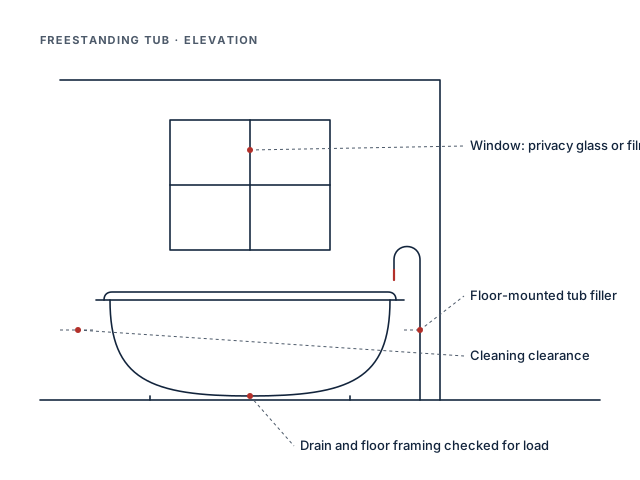
Finished on all sides and set on the floor. Needs clearance around it for cleaning, a floor-level drain, and a decision about where the filler lives. Looks best with space to spare, so it isn't the answer in every room.
Deeper than a standard tub so your shoulders go under. Can be alcove, drop-in or freestanding. Worth checking the water heater can fill it with hot water before the tub is ordered.
Material decides weight, heat retention, how it sounds when you step in, and how easily it chips.
| Material | Feel and heat | Weight | Watch for |
|---|---|---|---|
| Cast iron | Solid underfoot, holds bath heat well once warmed | Very heavy; may need floor reinforcement upstairs | Enamel can chip if something heavy is dropped |
| Acrylic | Warm to the touch, quieter than steel | Light and easy to carry up stairs | Needs full support underneath or it flexes and cracks; scratches with abrasive cleaners |
| Enameled steel | Harder, colder and louder than cast iron | Moderate | Chips can rust; thinner models feel hollow |
| Stone resin / composite | Dense and warm, a common freestanding choice | Heavy | Check the floor like cast iron; finish is repairable but not indestructible |
Planning a bathroom project? Call and tell us what you have in mind. We'll talk through scope and arrange a visit. Open daily 7 AM to 10 PM.
Suburban primary baths
Many homes built across Dallas's suburbs in the 1980s through the 2000s have the same primary bath: a large corner garden tub on a tiled platform, a window above it, and a small fiberglass shower beside it. The tub takes a lot of floor and rarely gets used.
You don't have to give up bathing to fix that. Common approaches we plan:
Each option moves the drain a different distance, and on a slab that's the biggest variable. For how this fits into a whole-room redo, see remodeling a primary bathroom.
We measure the space, confirm the drain side and height, look at the floor structure and ask how you actually bathe.
The filler type decides whether supply lines go in the wall, the deck or the floor. We settle both before either is ordered.
Cast-iron tubs are often broken up in place rather than carried out whole. Surround and nearby tile come out as needed.
Drain, overflow and supply lines are set for the new tub, and inspections happen where your city requires them.
The tub goes in level and fully supported, typically on a mortar or foam bed for acrylic, and is water-tested before walls close.
Surround or tile goes up with the right waterproofing, then filler, trim and a flexible sealant joint where tub meets wall.
Slab movement from North Texas clay can open the joint where the tub meets tile. We use a flexible sealant there, never grout, and a crack-isolation membrane on the floor around a freestanding tub.
Hard municipal water leaves mineral film on tub fillers and in jetted tub lines. If you are replacing a whirlpool, a plain soaker or an air tub is easier to keep clean.
More on pricing is on our bathroom remodel cost page.
Weighing a tub against a shower? Our guide to walk-in showers versus bathtubs lays out the trade-offs. We install tubs throughout Dallas and nearby cities including University Park and Garland. See every city on our areas we serve page.
Usually, if the alcove is a standard length and the new tub has the drain on the same end. The common catches are an out-of-square alcove, a drain on the opposite side, or a tub that is slightly deeper or taller than the old one, which changes where the valve and tile line sit. We measure the opening and check the drain side before you pick a model.
Not necessarily, but it has to be checked. A cast-iron tub is heavy empty and much heavier once it is full of water and a bather. On a wood-framed upper floor we look at joist size, span and direction before recommending one, and sometimes suggest acrylic or a composite that keeps the look with far less weight.
Wall-mounted fillers keep the floor clear but need the tub pushed close to a wall with plumbing access. Floor-mounted fillers let the tub float in the room but need supply lines run under the floor, which on a slab means cutting concrete. Deck-mounted fillers only work on tubs with a wide rim. We decide this at the layout stage because it drives the plumbing work.
Yes, if the tub itself is sound and you like it. A cast-iron or steel tub in good shape can stay while the fiberglass or tile surround, valve and trim are replaced. We protect the tub during demolition, but a badly chipped or rusted tub is usually worth replacing while the walls are open.
Talk to a remodeler
One call is enough to tell us what you'd like to change. We'll ask a few questions, then arrange a visit to measure and give you a written scope and estimate.
(469) 249-8764Open daily, 7:00 AM to 10:00 PM
Tap to call now